
How to Measure Anything: 5 Step Decision-Analysis for Better Outcomes

”We can’t measure that.”
How many times have we found it too difficult to reliably measure something that we would like to have a better understanding of?
Often, they’re “intangible” qualities we struggle with, maybe customer satisfaction, employee morale, innovation capacity, technology risk, and so much more, all of which are a part of many daily and strategic business decisions.
What if we, regular managers, leaders, and professionals, could learn how to measure anything for ourselves, even how to measure intangibles?
Too often, we resign ourselves to the idea that some things can’t be measured, so we make decisions based on intuition, politics, whoever argues most convincingly, or the HIPPO principle—the highest paid person’s opinion. The result is, at best, suboptimal decisions, but the effects can be consequential.
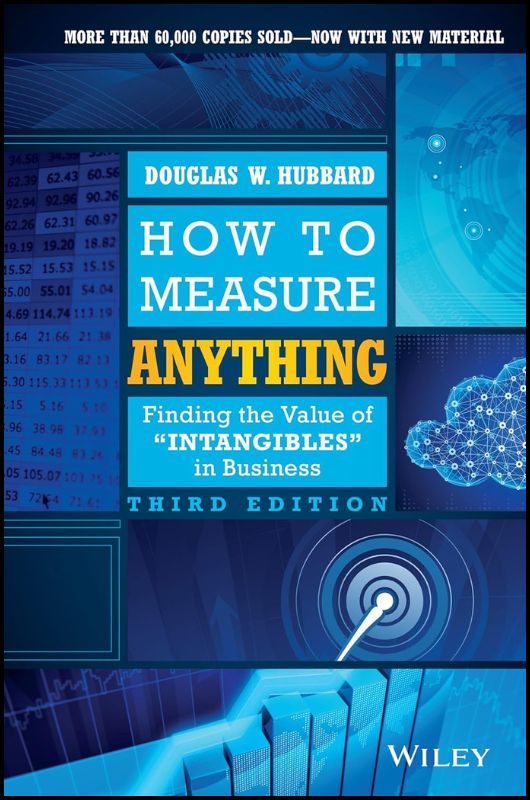
In How to Measure Anything: Finding the Value of Intangibles in Business, Douglas W. Hubbard conclusively debunks the myth of immeasurables and goes on to demonstrate that measuring intangibles is within our reach.
- Book: How to Measure Anything: Finding the Value of Intangibles in Business
- Author: Douglas W. Hubbard
- Publisher: Wiley, Third Edition, 2014
This post contains affiliate links. If you purchase through these links, we may earn a commission at no extra cost to you. Doing so supports this website and our ability to bring you these book reviews and other content. We genuinely appreciate your support and take our responsibility to provide quality, honest, and human-generated content to professionals like you seriously.
What How to Measure Anything Offers: A Framework for Measuring What You Need To Know
How to Measure Anything is both an academic and a practical how-to book. Hubbard first dismantles our misconceptions about measurement, then rebuilds our understanding with practical measurement methods and techniques.
But you don’t need a Phd! He keeps the text accessible and ensures the book has layperson utility, while grounding it in decision theory, probability, and empirical observation.
Measurement for Decision-Making
Hubbard approaches measurement not as achieving perfect precision but as reducing uncertainty enough to improve decisions. This shifts the question from “How do we measure this?” to “How do we know more about this?”