
Getting to Yes: 4 Elements of Mastering Principled Negotiation

We all negotiate agreements most every day, such as in coordinating activities, resolving issues, and aligning stakeholders. While we may think of negotiation skills in terms of making major deals, it is important to understand that how we reach agreements in everyday activities carries equally real consequences in the workplace and in business.
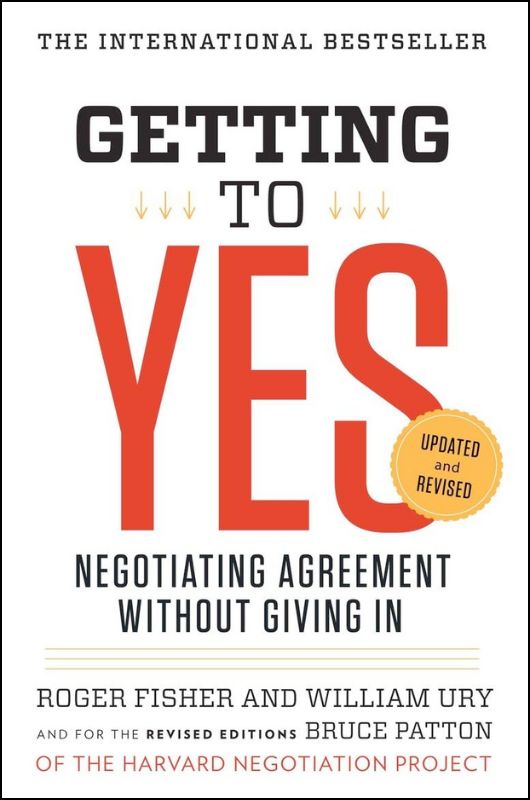
In Getting to Yes: Negotiating Agreement Without Giving In, Roger Fisher and William Ury wrote the book on modern negotiation. Their principled negotiation framework has formed the foundation for business and law school curricula worldwide, transforming how millions of professionals approach collaborative problem-solving, deal-making, and conflict resolution.
Fisher and Ury argue that negotiation occurs whenever persons have some combination of shared and opposing interests, or simply differing perspectives. While every negotiation is different, there is a set of basic elements of negotiation that do not change.
Getting to Yes presents negotiation tactics in a relatable manner across contexts and shows in practical terms how to apply them to achieve fair, sustainable outcomes.
- Book: Getting to Yes: Negotiating Agreement Without Giving In
- Authors: Roger Fisher and William Ury
- Publisher: Penguin Books, Third Edition 2011
This post contains affiliate links. If you purchase through these links, we may earn a commission at no extra cost to you. Doing so supports this website and our ability to bring you these book reviews and other content. We genuinely appreciate your support and take our responsibility to provide quality, honest, and human-generated content to professionals like you seriously.
What Getting to Yes Offers: The Principled Negotiation Framework
Negotiation is hard. We often make it harder by staking out a position on the issue. Fisher and Ury show us that positions are poor proxies for interests. Identifying interests, our own and theirs, is key to creating opportunity for fair and sustainable outcomes.
Principled Negotiation
Getting to Yes introduces the concept of Principled Negotiation. When we stake out positions, we bargain, make tradeoffs, and, whether purposefully or unintentionally, seek to undermine opposing positions to strengthen our own. Even “Win-Win” approaches force tradeoffs that may not be in our best interests.
These negotiation tactics often leave people on both sides of the negotiation dissatisfied and alienated.
Alternatively, Fisher and Ury present principled negotiation tactics for reaching agreements that:
- meet the legitimate interests of all parties to the extent possible,
- resolves conflicting interests fairly,
- is durable, and
- takes community interests into account.
4 Basic Elements of Negotiation
All negotiations consist of 4 basic elements; it’s how we think about them that matters:
- People. People have legitimate interests. Respect the person, focus on the problem.
- Interests. Positions are premature solutions. Interests are real human needs. Seek to meet needs.
- Options. Make room for constructive discussions open to possibilities. Staking out positions limits options.
- Criteria. Agree on fair standards of evaluation. This assures agreements are made on merits, not politics or power.
Getting to Yes Takes a Pragmatic Approach
Principled negotiation is not idealistic. On the contrary, Fisher and Ury are realists and take a pragmatic approach to negotiation.
- The first chapter describes problems with positional bargaining. It becomes a contest of wills, treating negotiation as a game that may never truly address the substance.
- The next four chapters explain and detail actionable techniques for each element of Principled Negotiation: People, Interests, Options, and Criteria.
- The final chapters offer practical negotiation tactics for handling people who may resort to power plays, be unbending or self-righteous, or employ manipulation tactics.
The book concludes with a Q&A section that explores specifics in more detail and includes an Analytical Table of Contents as a quick topical search and reference tool.
Why Getting to Yes Matters for Today’s Leaders
Workplaces today are more collaborative. Cross-functional teams, matrix organizations, and agile methodologies demand cooperative behaviors, reliable relationships, and principled negotiation skills that drive outcomes on merit rather than authority.
The principled negotiation framework aligns perfectly with lateral leadership principles Fisher later explored in Getting It Done. Both recognize the same reality: today, we must coordinate, influence, and achieve results across organizational boundaries without relying on formal power.
Effective workplace negotiation becomes essential when you’re resolving issues collaboratively, engaging stakeholders outside your chain of command, or facilitating agreement among peers with competing priorities.
Key Negotiation Tactics and Techniques
Tactical Guidance
Getting to Yes is a practical resource. It is filled with real-life examples that show how all kinds of interactions and conversations fall apart or pull together. Fisher and Ury provide specific negotiation skills and techniques for:
- Asking questions that uncover interests rather than just hearing positions.
- Techniques that separate generating options from creating positions or prematurely exposing what you might minimally accept.
- Handling difficult tactical ploys and negotiators who won’t play fair.
- Dealing with parties more powerful than you.
- Managing the negotiation process itself.
They consistently ground their guidance in actual negotiations, from labor disputes to international treaties to workplace negotiations, showing how the same principles apply across broadly different contexts.
Hard on the Problem, Soft on the People
This phrase captures one of the book’s core tensions: you can be firm about your interests while remaining respectful toward people. In fact, you must.
Fisher and Ury show that relationship preservation and fair, sustainable outcomes aren’t trade-offs; they’re interdependent. Attacking people makes them defensive and less creative. Likewise, making concessions to preserve relationships results in neither fair outcomes nor fair relationships.
The alternative this book clearly lays out with actionable guidance is to build a working relationship, communicate clearly, listen actively, seek to understand “opposing” interests, and tackle the problem constructively together while standing firm on your own interests.
I’ve observed how this principle transforms discussions over limited resources. When people take the time to